
Harry's New York Bar, Paris: History and 3 Classic Cocktails
For this week’s article, we partnered with Katie Stryjewski of Garnish. Check out her blog for fascinating cocktail history, as well as new recipes featuring your favorite spirits.
Research the story behind almost any classic cocktail and the same handful of places keep coming up. Harry’s New York Bar in Paris is one of them. In 1911, an American jockey named Tod Sloane had a wild idea: open an American-style bar in Paris. He wanted the atmosphere so authentic that he had a Manhattan bar taken apart and shipped across the Atlantic piece by piece. The New York Bar opened that year on Thanksgiving Day.
How Harry’s became a legend
Sloane hired a Scottish bartender named Harry MacElhone to run the place, and it turned out to be an inspired choice. MacElhone was warm, funny, and beloved by his regulars, and he had a gift for invention. The French 75, Sidecar, Old Pal, Scofflaw, Boulevardier, Monkey Gland, and (some say) the Bloody Mary all trace back to him. He wrote two books of recipes he created or perfected at the bar, Harry’s ABC of Mixing Cocktails (1919) and Barflies and Cocktails (1927), now considered cornerstones of Prohibition-era mixology.
When Sloane had to sell in 1923, MacElhone bought the bar and renamed it Harry’s New York Bar. It had always drawn American expats, but under MacElhone it became iconic. Visitors fleeing Prohibition learned to tell their taxi driver “Sank Roo Doe Noo” (5 Rue Daunou, the address). Ernest Hemingway, F. Scott Fitzgerald, Gertrude Stein, and George Gershwin were all regulars.
The regulars got a club of their own in 1924, when MacElhone and the American columnist O. O. McIntyre founded the International Bar Flies. Members carried a card, called the bar “Trap No. 1,” and greeted each other with a buzz and a wiggle of the fingers. Barflies and Cocktails was the society’s official book, which is why its 300 recipes come padded with in-jokes and cartoons.
The bar is still open, and it marked its centennial in 2011. It’s run today by Isabelle MacElhone, the widow of Harry’s grandson. It draws plenty of Parisians now, but it’s still a pocket of American bar culture in the city. One quirky tradition: every election year since 1924, the bar polls its American customers in a straw vote that has called every presidential race but two.
3 classic cocktails born at Harry’s
Want to feel like an American in Paris? Start with one of these three, then work through the four further down.
The Sidecar
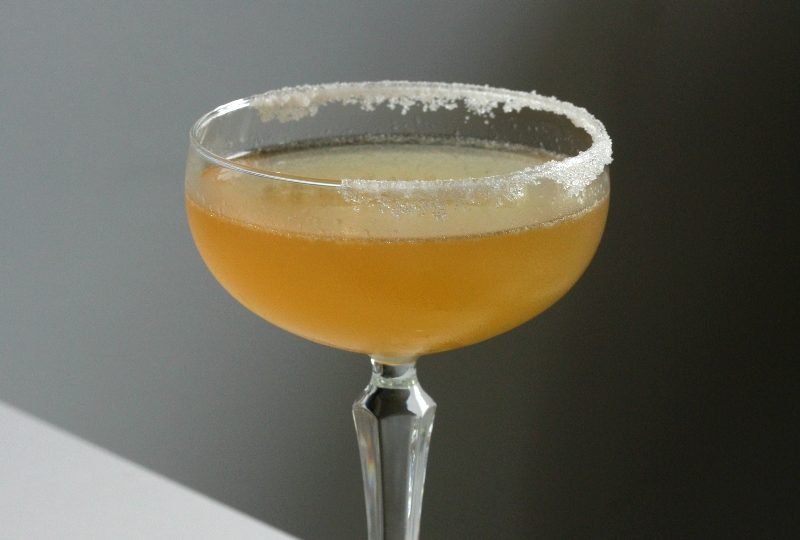
MacElhone’s original called for equal parts brandy, Cointreau, and lemon juice. This version from the PDT Cocktail Book, roughly two-thirds cognac with a third each of Cointreau and lemon, lands better on modern palates. See recipe
The Old Pal
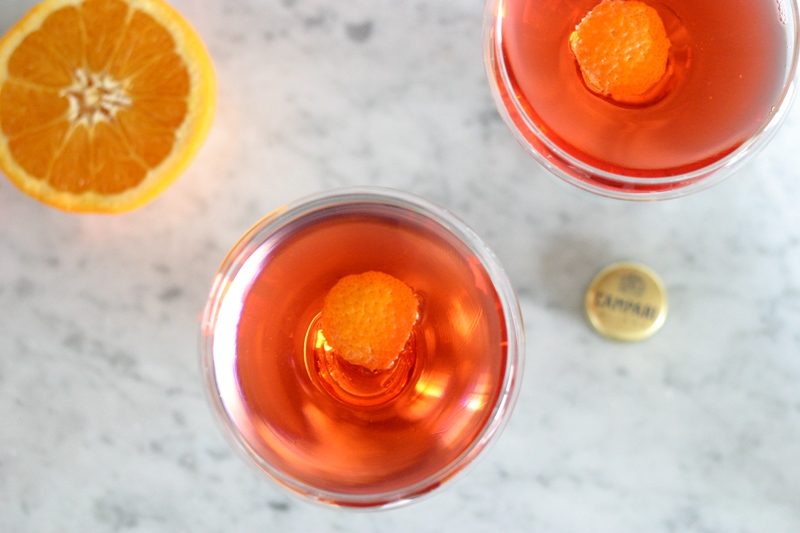
This riff on a Negroni came from one of MacElhone’s old pals, the journalist William “Sparrow” Robertson. It swaps gin for whiskey and sweet vermouth for dry, and the recipe comes straight from his first book. See recipe
The Monkey Gland
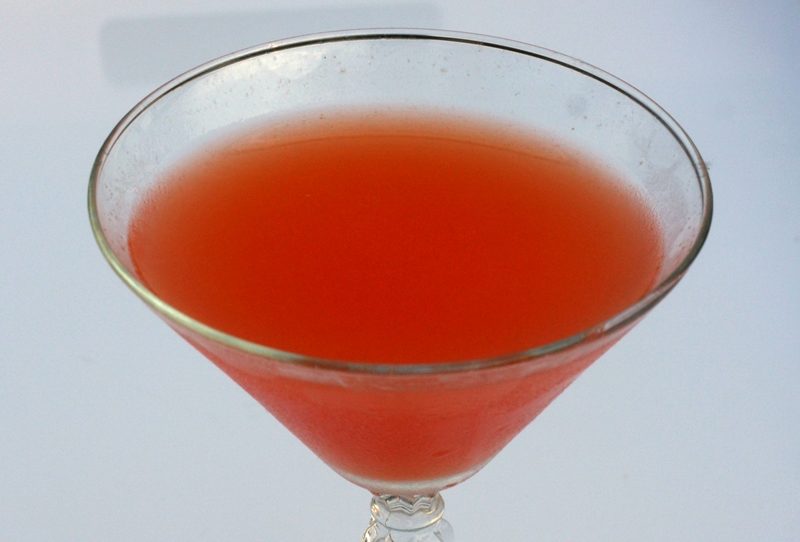
MacElhone named this one for Serge Voronoff, a surgeon then famous for transplanting monkey testicles into older men to “restore their virility.” (Yes, really.) This Imbibe version mixes gin, orange juice, grenadine, and absinthe, with a little simple syrup. See recipe
4 more drinks with a Harry’s claim
These four are also credited to the bar, with varying degrees of certainty.
French 75

Gin, lemon, simple syrup, and champagne, named for the French 75mm field gun of the First World War. MacElhone printed a drink called the 75 in Harry’s ABC of Mixing Cocktails, which is the basis of the bar’s claim, though his early version had no champagne in it; the gin, lemon, and champagne build everyone knows shows up in print in the late 1920s. New Orleans pours it with cognac, and the cognac French 75 is worth trying side by side. See recipe
Boulevardier
Bourbon, Campari, and sweet vermouth, an ounce and a half to one to one, stirred and served over a big cube with an orange twist. It appears in Barflies and Cocktails (1927), credited to Erskine Gwynne, an American expat who published a Paris magazine called Boulevardier and drank at Harry’s. Line it up next to the Old Pal: sweet vermouth and bourbon on one side, dry vermouth and rye on the other, Campari holding both together. The Negroni post walks through what each swap does. See recipe
Scofflaw
Canadian whisky, dry vermouth, lemon juice, grenadine, and a dash of orange bitters, stirred and served up. The word “scofflaw” was coined in January 1924, the winner of a Boston contest to name people who drank in defiance of Prohibition, and Harry’s had a cocktail by that name within weeks. The Paris edition of the Chicago Tribune credited “Jock,” the bar’s manager, not MacElhone. It drinks like a whiskey sour’s drier, paler cousin. See recipe
Bloody Mary

Vodka, tomato juice, lemon, Worcestershire, Tabasco, salt and pepper, over ice with a lime wedge. The Harry’s claim rests on Fernand Petiot, who bartended there in the early 1920s and later said he’d first mixed vodka and tomato juice at the bar. He moved to the St. Regis in New York in 1934, and that hotel maintains the drink was perfected there, under the name Red Snapper. Petiot himself said the 1920s version was vodka and tomato juice and nothing else; the seasoning, and everything in the long-form Bloody Mary build, came later. See recipe
Making a round at home
The Old Pal and Boulevardier are all spirit, so they batch. Multiply each ingredient by the number of drinks, add about 20 percent of the total in water to stand in for ice melt, and keep the bottle in the fridge. It pours straight into a chilled coupe and keeps for weeks.
The Sidecar and French 75 have lemon in them and don’t. Mix spirit, liqueur, and syrup ahead, add the juice within a few hours of serving, and shake to order. Champagne goes in the glass last, never the shaker.
One detail from the books: the Old Pal as printed at Harry’s used Canadian Club, softer than the American rye most bars stock now. If yours tastes sharp, split it with bourbon.
Frequently asked questions
What cocktails were invented at Harry’s New York Bar?
Harry MacElhone is credited with the Sidecar, the French 75, the Old Pal, the Scofflaw, the Boulevardier, and the Monkey Gland, and some accounts trace the Bloody Mary there too.
Where is Harry’s New York Bar?
At 5 Rue Daunou in Paris. Expats famously taught cab drivers to find it by saying it phonetically: “Sank Roo Doe Noo.”
Is Harry’s New York Bar still open?
Yes. It opened in 1911, passed its centennial in 2011, and is still running, now under Isabelle MacElhone.
Who was Harry MacElhone?
A Scottish bartender hired to run the bar in 1911. He bought it in 1923, renamed it Harry’s New York Bar, invented a string of now-classic cocktails, and wrote two influential cocktail books.
Was the Bloody Mary really invented at Harry’s?
Fernand Petiot, who worked at Harry’s in the early 1920s, said he first mixed vodka and tomato juice there. The St. Regis in New York, where Petiot moved in 1934, claims the finished drink. Most cocktail historians split the credit: the idea in Paris, the seasoning in New York.
What is the difference between an Old Pal and a Boulevardier?
Both pair whiskey with Campari. The Old Pal uses rye and dry vermouth in equal parts, so it comes out lean and bitter. The Boulevardier uses bourbon and sweet vermouth, heavier on the whiskey, and drinks like a Negroni with the gin swapped out.
Few bars have shaped the cocktail canon like this one, from the Sidecar to the Bloody Mary. Three more drinks from the same decade that didn’t survive as well are in lost cocktails of Prohibition. You can pull up these Prohibition-era classics and hundreds more on Cocktail Builder and search by spirit, style, or whatever you’ve got on the shelf.
Last modified on September 3, 2026
