
Does Vermouth Go Bad? Yes, and It's Ruining Your Martinis
Read this in: Español · Deutsch · Français · Italiano
If your home Martinis never taste quite like the ones at a good bar, look at the vermouth before you blame the gin. That bottle has probably been sitting next to your liquor at room temperature since a party two summers ago. It was dead within months.
Vermouth is wine. Fortified, aromatized, a little stronger than your average Riesling, but wine all the same, usually 15 to 18 percent alcohol. Once you pull the cork, oxygen starts working on it the same way it works on a Tuesday-night Cabernet, just slower. (Champagne plays by different rules again — bubbles change the math.)
How long vermouth actually lasts
- Unopened: 3 to 4 years from purchase, kept cool and dark. It won’t improve, so there’s no reason to sit on it.
- Opened dry vermouth: about 1 month in the fridge before it’s noticeably duller. Some people push it to 3. By then the Martini has changed character.
- Opened sweet vermouth: roughly 2 months refrigerated. The sugar and darker flavors hide oxidation a little longer.
- Opened, stored on the shelf: weeks at best. Room temperature roughly doubles the speed of decline.
Not every bottle fades at the same rate. By style:
| Style | Typical bottles | Unopened | Opened, on the shelf | Opened, in the fridge |
|---|---|---|---|---|
| Dry / extra dry | Dolin Dry, Noilly Prat | 3 to 4 years | 2 weeks | 1 month, 3 at a stretch |
| Blanc / bianco | Dolin Blanc, Martini Bianco | 3 to 4 years | 3 weeks | 6 weeks |
| Sweet / rosso | Martini Rosso, Cocchi di Torino | 3 to 4 years | 1 month | 2 months |
| Heavy Torino style | Carpano Antica, Punt e Mes | 3 to 4 years | 1 month | 2 to 3 months |
More sugar and more bitter root means more cover for the oxidation. Dry vermouth has the least of both, so it shows its age first. Punt e Mes, with its extra quinine bite and a lot of caramel behind it, is the one bottle you can be a little sloppy with.
None of this is about safety. Old vermouth won’t hurt you. It’ll just taste flat, nutty, and vaguely of cheap sherry, and it will drag every Manhattan and Negroni down with it.
What is actually happening in the bottle
Oxygen reacts with the wine and leaves behind acetaldehyde, the chemical that gives a three-day-old open Chardonnay its bruised-apple smell. Sherry is made that way on purpose, over years, in half-empty barrels. Vermouth is not. Cold is the only real brake, since every reaction in that bottle runs slower at 4°C than at 22°C.
How to tell a bottle has turned
Pour a little in a glass and smell it. Fresh dry vermouth is bright, herbal, a bit floral. Oxidized vermouth smells like a nut roast: flat, bruised-apple, sherried. Sweet vermouth loses its spice and cola notes and goes syrupy-dull. If you can’t remember when you opened it, that’s usually your answer.
For a harder test than your nose, mix a Manhattan with the suspect bottle; a dead one shows up at once as a flat, raisiny finish. With dry vermouth the test is a wet Martini, 2:1, not the eyedropper kind. At a quarter teaspoon per drink you would never taste the difference either way.
Keeping it alive longer
Refrigerate from day one. Not after it starts tasting off, from the moment the cork comes out. The fridge is the single biggest thing you can do for vermouth.
Buy small bottles. A 375 mL of dry vermouth costs a few dollars more per ounce and saves you from pouring out half a big one. Unless you’re making Martinis weekly, the half bottle is the right size.
Write the date on the label. A sharpie on the shoulder of the bottle beats guessing. Bars do this for a reason.
Demote, don’t dump. Faded vermouth is still great in the kitchen: deglaze a pan with dry vermouth anywhere a recipe wants white wine, or splash sweet vermouth into a braise or mushroom sauce.
If you want to go deeper on what sweet vermouth even is and where it came from, we’ve covered the history and styles of sweet vermouth and a set of vermouth-forward cocktails worth burning through a fresh bottle on.
Drinks that empty the bottle before it fades
A 750 mL bottle holds a little over 25 ounces. At the quarter ounce most Manhattan recipes call for, that is a hundred drinks, which makes the Manhattan and the Martini the two worst tools on earth for finishing a bottle of vermouth. These five pour it by the ounce.
Americano
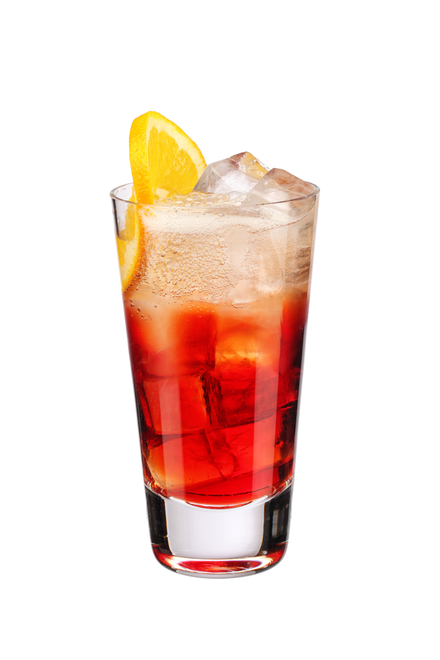
An ounce of sweet vermouth and an ounce of Campari over ice in a tall glass, soda to fill, lemon and orange twists. Vermouth is half the drink and there is nowhere for a tired bottle to hide. See recipe
Adonis
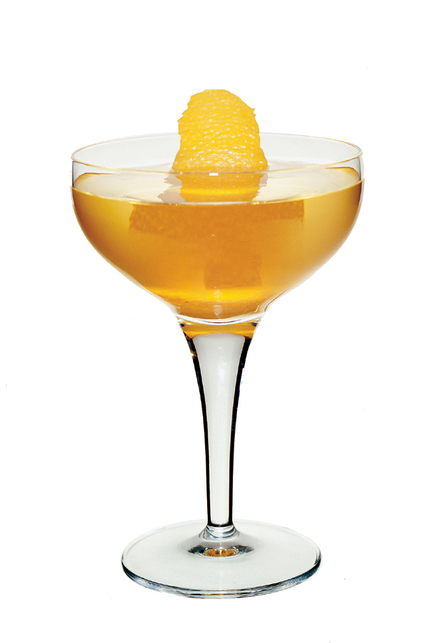
An ounce and a half each of dry oloroso sherry and sweet vermouth, two dashes of orange bitters, stirred, served up with an orange peel. Named for an 1884 Broadway show, under 20 percent alcohol, and an ounce and a half of vermouth gone per glass. See recipe
Bamboo
The Adonis’s drier sibling: amontillado sherry and dry vermouth, an ounce and a half of each, orange bitters, a dash of aromatic bitters, lemon peel. The classic way through a bottle of dry that doesn’t involve six Martinis. See recipe
Old Pal

Rye, Campari, and dry vermouth, an ounce apiece, stirred, orange twist. The dry vermouth keeps it leaner than a Boulevardier, and at a full ounce per drink a 375 lasts a dozen rounds rather than a year. See recipe
Vermouth Cassis
Paris café stuff: an ounce and a half of dry vermouth, three quarters of an ounce of crème de cassis, soda to fill, over ice. Low-proof, and the right home for a bottle a week past its prime, since the cassis covers a great deal. See recipe
For the two drinks that started this whole conversation, our Manhattan guide goes into ratios and which vermouth to buy, and Negroni ingredients covers what happens when you change one part of three.
Frequently asked questions
Does vermouth need to be refrigerated?
After opening, yes. Vermouth is fortified wine, and the fridge slows oxidation dramatically. Unopened bottles are fine in a cool, dark cabinet.
How long does vermouth last once opened?
Refrigerated, dry vermouth stays at its best for about one month and sweet vermouth for roughly two. Left at room temperature, both fade within weeks.
How long does unopened vermouth last?
Three to four years is a safe window. It’s shelf-stable but not immortal. Very old unopened bottles slowly fade even through the cork.
Can old vermouth make you sick?
No. Oxidized vermouth is a flavor problem, not a safety one. The alcohol keeps anything dangerous from growing. Drink it or cook with it without worry. Just don’t expect it to taste like much.
Is vermouth still good after a year?
Unopened, yes. Opened, no, not for drinking, even from the fridge. A year-old open bottle of sweet vermouth tastes like flat sherry and a year-old dry one tastes of almost nothing. Cook with it and buy a fresh 375.
Can you freeze vermouth?
Not usefully. At 15 to 18 percent alcohol it turns slushy in a home freezer and the texture suffers once thawed. The fridge is the right tool.
Why do bars keep vermouth on the counter?
High-volume bars burn through a bottle in a day or two, so it never has time to fade. Your home bar doesn’t have that excuse, which is exactly why home Martinis suffer.
Fresh bottle in the fridge? Put it to work while it’s still singing. Cocktail Builder can show you every drink you can make with the vermouth and whatever else is on your shelf. And for the bigger picture on every bottle you own, see our full guide to how long alcohol lasts.
Last modified on September 3, 2026
